HHS's October 28 grant announcement, ACL's research mandate, and established Model Systems equipment guidance
Federal disability-research funding announced October 28 includes work on assistive technology and community living. HHS announced $35.76 million across 68 new grants. Several projects address practical problems familiar to occupational therapists.
In brief
- Awards include a wheelchair-mounted robotic arm and an online assistive technology assessment platform.
- Research funding does not establish a treatment's effectiveness or insurance coverage.
- Equipment decisions still begin with the user's activities and environment.
A research agenda close to daily life
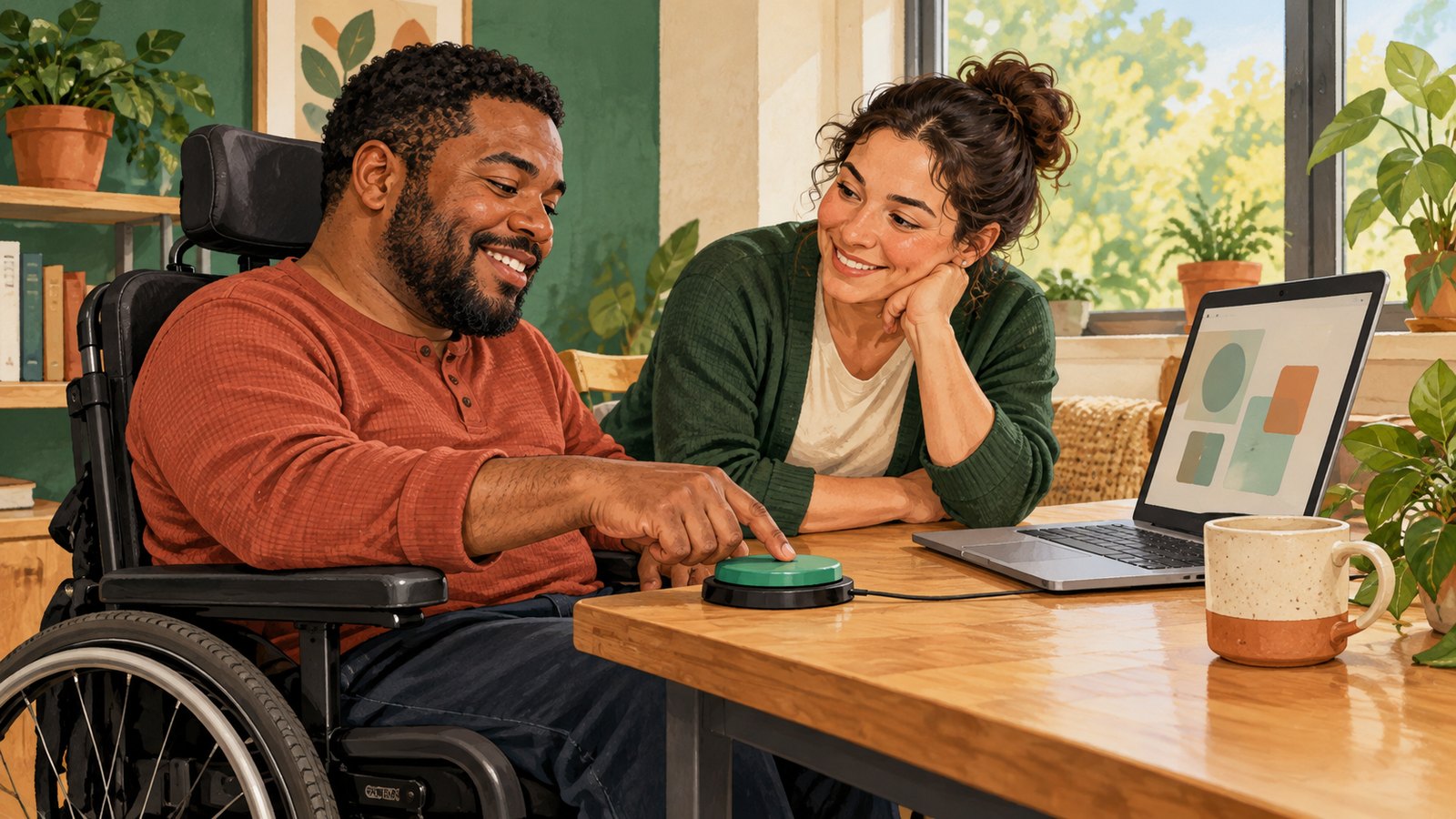
The University of Wisconsin–Milwaukee and Georgia Tech receive a combined $999,993 for separate projects: a robotic arm with accessible controls and an online assessment platform, respectively. Other awards support smart-home research at the University of Pittsburgh and spinal cord injury studies that include arm recovery and fatigue at Craig Hospital. The funding figures are fiscal 2026 obligations verified October 6; continuing multiyear projects receive separate funding.
The awards come through the National Institute on Disability, Independent Living, and Rehabilitation Research, or NIDILRR. ACL describes its mandate as developing knowledge and rehabilitation technology that support employment, independent living, and participation. Promoting the use of research is also part of its work. A grant announcement gives clinicians a project to follow; clinical adoption requires evidence about the proposed use.
Equipment guidance is available now
For a team discussing wheelchair access today, the Model Systems Knowledge Translation Center already has a consumer guide to choosing a chair. It puts the wheelchair user at the center of a team that can include an OT or PT experienced in evaluation and training, a physician, and an equipment supplier. Family or caregiver input also belongs in the discussion.
The guide asks readers to consider the home and work environment, transportation, and the activities the chair needs to support. It also covers equipment trials and financial questions. Those are useful topics for a shared assessment conversation while new technology moves through development. The guide is an established resource, separate from this week's awards.
Follow the task through the trial
OT departments can use the announcement to choose a few projects for a journal club or equipment meeting to track. Start with a recurring problem in the service: a client unable to reach a work surface, for example, or someone whose computer access breaks down with fatigue.
When results appear, look for who tested the device, where they used it, and what assistance they needed. Ask whether the study measured a task the client wants to do and whether training, maintenance, or setup would be manageable at home. Keep coverage and purchasing checks tied to the actual device and payer. A promising design earns a closer look when it answers those everyday questions.