Analysis based on the University of Florida's July 20 announcement, NIH RePORTER award 1R61AA032062-01A1, and peer-reviewed studies of sensory processing in FASD and sensory-integration intervention in autistic children.
The most important word in the University of Florida's new announcement is study. Sensory-focused care is already familiar in pediatric occupational therapy, while its effects can vary across children, goals, diagnoses, and intervention models. An NIH-funded team led by occupational therapy researcher Stefanie Bodison will now test a sensory-enriched intervention for children with fetal alcohol spectrum disorders, pairing measures of daily function with brain imaging. The award opens a promising line of inquiry. The treatment verdict will have to wait.
In brief
- The phased R61/R33 project will begin with children ages 6 to 8 and examine sensory processing, self-regulation, adaptive behavior, and white-matter microstructure.
- NIH lists $283,376 for the current fiscal-year award and project dates from May 15, 2026, through April 30, 2028; UF describes a five-year study plan that includes a later phase.
- The study launch does not establish effectiveness in FASD. Clinicians should watch for a registered protocol, enrollment details, milestone decisions, and published functional outcomes.
The trial starts with a participation problem
Children with fetal alcohol spectrum disorders can experience difficulty with attention, coordination, self-regulation, adaptive behavior, and school performance. Sensory processing is one possible contributor. In a 2020 clinical study of 325 children ages 3 to 11 with prenatal alcohol exposure, 73.2% scored in the definite-difference range on the Short Sensory Profile. Higher reported exposure was associated with more atypical sensory-processing symptoms.
Those findings describe a pattern; an effective intervention remains to be identified. A child who leaves a noisy classroom, collides with peers, avoids dressing tasks, or becomes overwhelmed during transitions still needs an evaluation grounded in the activity, environment, routines, strengths, and family priorities. A sensory score can add context. It cannot explain every barrier on its own.
The new study is aimed at that gap between a recognized clinical feature and a tested route to better participation. University of Florida researchers say they hope the intervention will make school tasks and peer activities easier for children who are otherwise pulled away by frustration or dysregulation.
What the NIH award will test
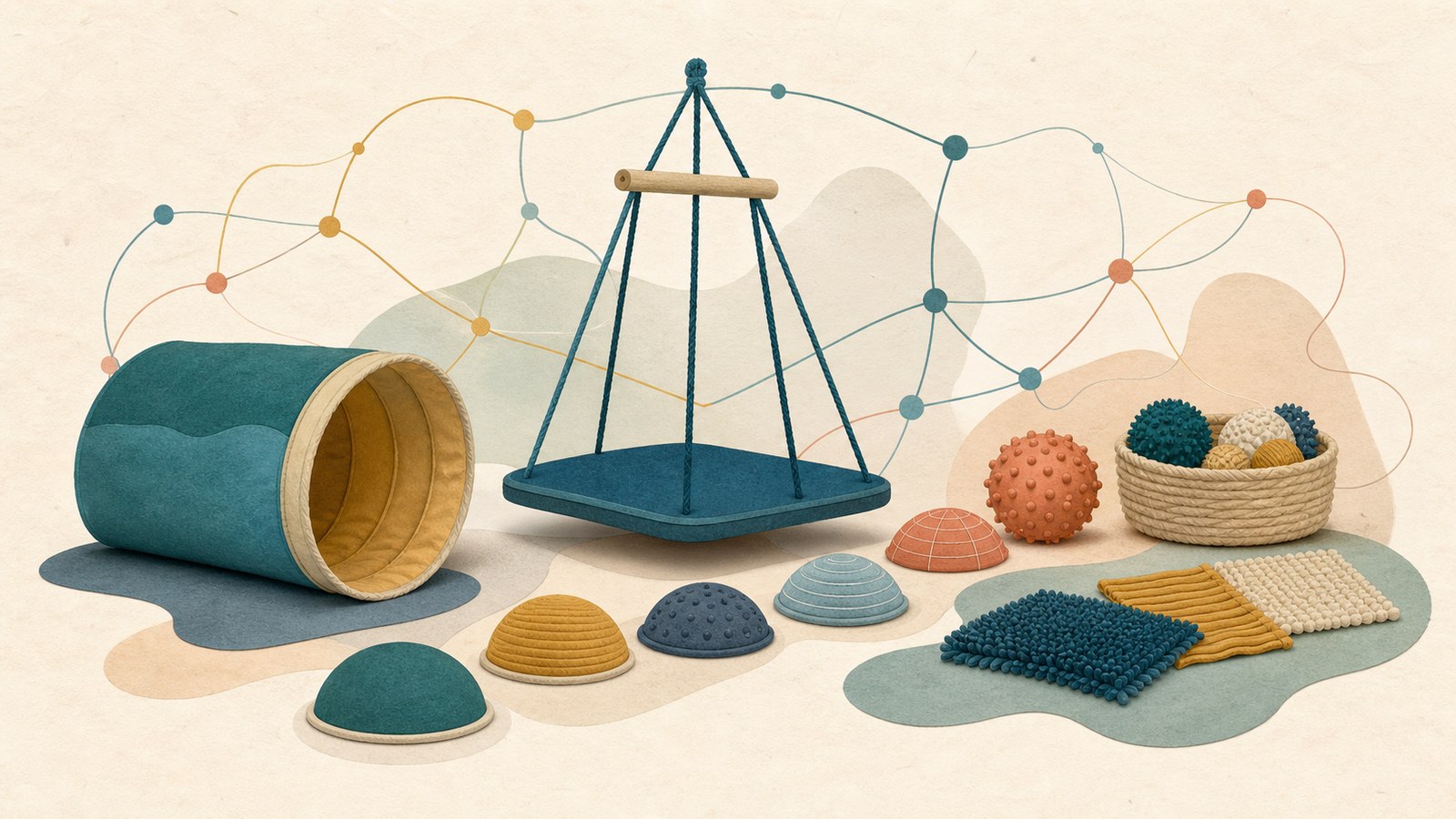
The NIH project record identifies the work as a Phase 1 clinical trial led by Stefanie Bodison, OTD, PhD, OTR/L, at the University of Florida. The initial group will include children ages 6 to 8 with FASD. The team plans to adapt a sensory-enriched intervention, compare participating children with controls, and examine changes in sensory processing, self-regulation, and adaptive behavior.
A second line of inquiry will use neuroimaging to study white-matter microstructure in sensory networks. The proposed model asks whether changes in those networks help explain changes in regulation and adaptive behavior. That mechanism question matters because a treatment can look plausible in the clinic while its active ingredients remain unclear.
The grant uses an R61/R33 phased structure. NIH RePORTER lists the current project period from May 15, 2026, through April 30, 2028, with a $283,376 award for fiscal 2026. The university describes the broader effort as a five-year study. Later-stage work in a phased award follows milestone review, so the dates and dollars for the opening phase should not be read as a guarantee that every planned year will proceed unchanged. The public project abstract does not yet provide a sample size, intervention dose, control condition, or recruitment instructions.
Related autism research offers a cautious starting point
The Florida team says it is adapting an approach used with autistic children who have sensory-processing difficulties. Transfer across diagnoses remains unproved. FASD and autism can share functional challenges while differing in developmental history, neurobiology, co-occurring conditions, family experience, and the pattern behind a child's response to sensation.
The autism literature also resists a single tidy conclusion. A 2014 randomized trial of 32 autistic children found better goal attainment, caregiver assistance in self-care, and socialization after a manualized occupational therapy intervention than after usual care. A larger 2022 trial randomized 138 children and found that sensory integration therapy was delivered with fidelity and without identified adverse effects, yet it did not outperform usual care on the primary behavioral outcome across the full group and cost more.
That mixed record strengthens the case for a controlled FASD study with clearly reported methods. It also argues against language that treats an NIH award, a brain image, or encouraging results from another diagnosis as proof for current practice. The useful question is narrower: which children, receiving what intervention and dose, improve on which participation outcomes, and how durable are those changes?
Brain imaging should serve the functional question
White-matter measures may help researchers trace how sensory information is organized across brain networks. They can also make a study sound more conclusive than it is. A measurable imaging change needs to be interpreted beside changes that matter in a child's life: getting dressed, staying with a classroom activity, recovering from frustration, joining peers, sleeping, playing, and managing family routines.
The NIH abstract appropriately includes sensory processing, self-regulation, and adaptive behavior alongside neural architecture. When results arrive, readers should look for prespecified outcomes, blinded assessment where feasible, attrition, harms or distress, treatment fidelity, and whether functional gains exceed change seen in the control group. Statistical significance and clinical usefulness deserve separate attention.
Families should also expect plain language about burden. MRI procedures, visit frequency, travel, caregiver questionnaires, and the time required for a play-based intervention all affect who can participate and whether a model can work outside a university lab.
What pediatric OT teams can do now
Current care should continue to follow the child's occupational profile, evaluation findings, goals, response to intervention, and family priorities. For a sensory-focused plan, document the participation problem first, the clinical reasoning that connects it to sensory processing, the intervention delivered, its dose, and change on functional measures. Reassess when the expected change does not appear.
Clinicians discussing the study with families can use three careful sentences: the intervention is being tested in children with FASD; the project includes functional and brain-based outcomes; results are not yet available. NIH funding indicates that the research was selected for support; it does not amount to regulatory approval or evidence that a particular clinic's treatment is effective.
The next useful documents will be a trial registration or published protocol, followed by milestone reporting and peer-reviewed results. Until then, the study's contribution is a well-defined research question in an area where families and therapists already face real decisions with limited diagnosis-specific evidence. That is a meaningful beginning, with the uncertainty still visible.