Analysis based on the August 25 OTJR study and PubMed record, the official PEM-CY and SCOPE instrument descriptions, SAMHSA child and youth crisis-care guidance, and AOTA's school mental-health toolkit.
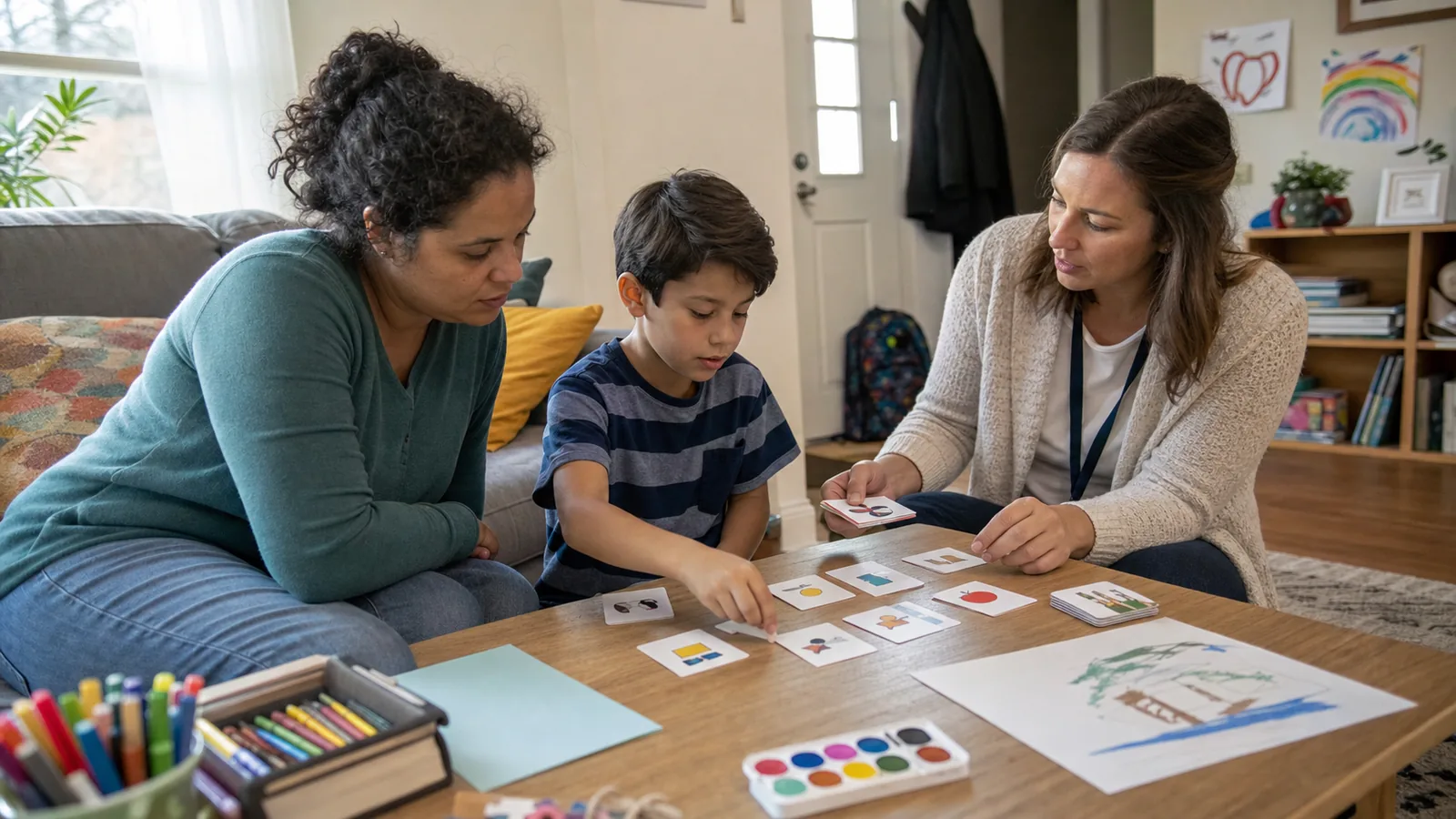
The admission note records the crisis. It can miss the quiet erosion that came first: homework abandoned, chores turning into flashpoints, community outings shrinking, and family routines held together by schedules and rewards. A new OTJR study examined that everyday terrain among children ages 6 to 12 before psychiatric hospitalization. Across reports from 141 parents, hospitalized children participated less at home and in the community than children with neurodevelopmental conditions and typically developing peers. Consistent family routines tracked with greater participation; environmental barriers tracked with lower involvement. The study gives OT teams a sharper lens for the trip home. It does not establish causes or test an intervention.
In brief
- Researchers compared parent reports for children ages 6 to 12 in three groups: children hospitalized for mental-health reasons, children with neurodevelopmental conditions, and typically developing children.
- The hospitalized group had significantly lower participation than both comparison groups. Parents also reported more barriers and greater desire for change than parents of typically developing children.
- Consistent family routines were associated with greater participation, while environmental barriers were associated with lower involvement. Occupational therapists also completed home observations for 30 hospitalized children.
The study begins outside the unit
The research team came from Sheba Medical Center and Tel Aviv University, with occupational therapy leadership from the Hebrew University of Jerusalem. Their cross-sectional study compared three groups through reports from 141 parents: children hospitalized for mental-health reasons, children with neurodevelopmental conditions, and typically developing peers. All of the children were between 6 and 12 years old.
Parents completed the Participation and Environment Measure for Children and Youth and the Family Routines Inventory. The PEM-CY asks families about how often a child participates, how involved the child is, whether the family wants that participation to change, and which features of home, school, and community help or get in the way. Occupational therapists also visited the homes of 30 hospitalized children and completed the Short Child Occupational Profile, which examines how volition, habits, skills, and environment shape participation.
That design reaches beyond diagnosis and symptom severity. It asks what childhood looked like in the places where the day actually happened. The answer includes ordinary activities, family expectations, physical and social surroundings, and the fit between a child's emotional abilities and the demands placed on them.
Participation had narrowed before admission
The hospitalized children showed significantly lower participation at home and in the community than both comparison groups. Compared with typically developing children, they also encountered more environmental barriers, and their parents more often wanted participation to change. The abstract does not provide group sizes, effect sizes, or score distributions, so the magnitude of each difference cannot be judged from the public record.
The journal's plain-language summary adds texture to the result. At home, hospitalized children often spent time in low-demand activities such as television. They could still become highly involved in self-directed creative activities. Outside the home, unstructured play drew interest. Those patterns suggest that participation had changed shape rather than disappearing altogether.
The strongest home barriers came from the social and occupational environment. Daily demands such as homework or chores became harder to enter when they exceeded the child's emotional capacity. This is familiar clinical ground for OT: performance can break down because the task, expectations, cues, relationships, timing, or sensory and emotional load no longer fit the person doing it.
Routines were a signal in the data
More consistent family routines were associated with greater participation. Environmental barriers moved in the other direction, alongside lower involvement. The parents in the study often used schedules and rewards to support the day. Strategies built around shared decisions or social connection appeared less often.
These associations deserve careful handling. A steady routine may support participation, and a child who is doing better may also make routines easier to sustain. Acute symptoms, caregiver strain, school demands, resources, housing, culture, and treatment access can push both measures at once. The study cannot tell a family that a schedule would have prevented admission.
It can prompt better questions. Which parts of the day remain dependable? Where does the first mismatch appear? Which activities still draw sustained involvement? What does the child choose when demands ease? Which people, spaces, cues, and expectations widen participation? A routine inventory becomes useful when it locates an opening for action instead of grading the household.
Put the home into discharge planning
SAMHSA's child and youth crisis-care guidance says that out-of-home care is sometimes the safest course and that the priority should then shift toward a safe return home and connection to community services. A discharge plan built entirely around appointments and medication leaves much of that return undescribed. The child still has to wake, dress, eat, travel, learn, rest, play, relate to family, and re-enter community life.
OT teams can record a participation baseline early in the admission and revisit it before discharge. For each important home, school, or community activity, document frequency, involvement, the child's and family's desired change, and the environmental features that help or hinder. The PEM-CY concepts are useful even when a service uses another validated measure or a structured occupational profile.
Choose a small number of occupations for the first phase of re-entry. A morning routine, one family responsibility, a preferred creative activity, a school transition, and one manageable community activity may reveal more than a long generic checklist. Name who will support each activity, how the demand will be graded, what will signal overload, and when the team will review progress.
Give the child a hand on the controls
The study's finding about self-directed creative activity and unstructured play deserves attention. These preferences are clinical information about agency, interest, and tolerable demand. They may offer an entry point for rebuilding a day that has become crowded with adult-directed treatment, evaluation, and risk management.
Shared decision-making can begin with small choices: which activity returns first, where it happens, who joins, how long it lasts, and what the child wants adults to do when the task becomes too much. A visual routine or reward system may still have a place. The plan is stronger when the child can shape it and when social connection is designed with the same care as task completion.
Safety planning, diagnosis, psychotherapy, medication management, family therapy, and crisis follow-up retain their own clinical roles. Occupation-based work can make those plans livable by translating them into the actual contexts and routines where recovery must hold. AOTA's school mental-health guidance similarly emphasizes strengths, meaningful choice, environmental modification, self-regulation, and collaboration with the child, family, and team.
Keep the limits beside the findings
The study was conducted in Israel and focused on children ages 6 to 12. Service systems, hospitalization thresholds, family routines, school expectations, and cultural meanings of participation vary across countries and communities. The public abstract does not report diagnoses within the hospitalized group, demographic balance, socioeconomic context, length of stay, or the distribution of participants across the three groups.
The design captured one point in time. Parent reports can reveal daily life that a ward team never sees, while also carrying recall and perspective effects. Home observations were available for 30 hospitalized children. The study did not follow children after discharge, test a routine-based intervention, measure readmission, or show that greater participation changed psychiatric outcomes.
The next step is longitudinal and practical: follow participation from admission through community re-entry, include the child's own report, test specific environmental and routine interventions, publish group-level details and effect sizes, and examine whether gains last. Multisite work would show which findings travel across settings and which depend on local context.
Recovery needs a place on the calendar
Psychiatric hospitalization compresses a child's story into immediate safety and stabilization. Occupational therapy has reason to expand that story again. The route home runs through the small repeated occupations that give a day its shape and a child a place in family, school, and community life.
This study makes those occupations visible before admission and identifies routines and environmental fit as places worth examining. It points teams toward four practical tasks: map the day, find the remaining strengths, share control, and build the return around activities the child can enter and sustain.
A discharge date closes an inpatient episode. Participation tells the team whether ordinary life has started to reopen.